Wondering what order to apply skincare in? A good skincare routine order is simpler than a crowded bathroom shelf suggests. Here is the order, how many steps you really need, and how to add something new without upsetting your skin.
What is the right skincare routine order?
Start with clean skin, then your lightest, most targeted products, then moisturiser. In the morning, finish with sunscreen.
Osmosis directions put the activating mist after the serum: a few sprays, pressed in, help the serum spread evenly. Any second serum follows the mist.
In the morning
- Cleanser
- Serum
- Activating mist (optional)
- Moisturiser
- Sunscreen
Cancer Council recommends sunscreen as part of your morning routine whenever the UV index is forecast to reach 3 or above: about a teaspoon for your face, neck and ears, applied 20 minutes before going outside and reapplied at least every two hours outdoors. Cancer Council — Preventing skin cancer
At night
- Cleanser, to remove sunscreen and make-up
- Serum
- Activating mist (optional)
- Moisturiser
How many steps do you really need?
Fewer than you might think. For easily irritated skin, DermNet's basics are a soap-free cleanser, regular moisturiser and good sun protection. Each extra product adds possible triggers, and irritation usually builds up from repeated contact with several mild irritants. DermNet — Sensitive skin
Start with those three, and add a serum or mist when you have a specific reason.
Which Osmosis products go at each step?
You only need one product per step.
- Cleanser. Cleanse is a gentle gel cleanser for dry and sensitive skin. Purify is an enzyme cleanser for oily, blemish-prone and ageing skin. It exfoliates, so skip it while your skin is irritated or sunburnt; DermNet advises avoiding harsh exfoliants on sensitive skin. DermNet — Sensitive skin
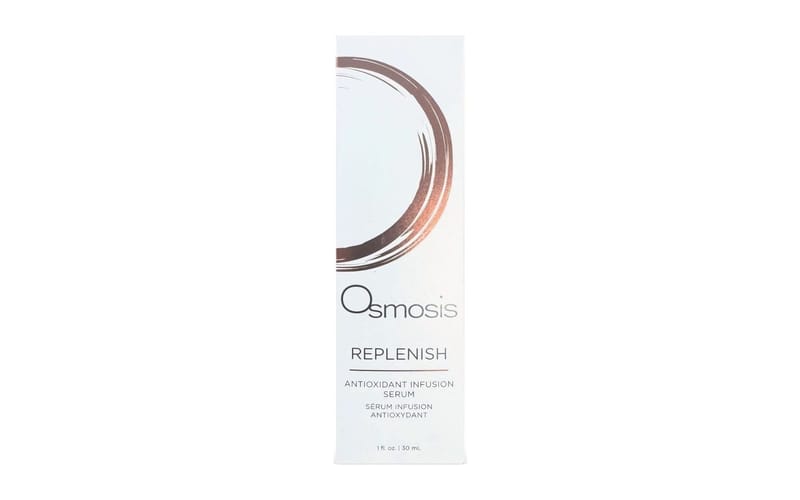
- Serum. StemFactor is a light serum with a short ingredient list, Replenish an antioxidant serum, Catalyst a vitamin C serum that helps skin look brighter, and Calm a gentle retinal (vitamin A) serum.
- Activating mist. Boost is a hydrating mist for dry, sensitive and ageing skin. Balance is made for oily, congested and blemish-prone skin. It contains alpha hydroxy acids (AHAs), which DermNet lists among common irritants for sensitive skin, so Boost is the gentler choice. DermNet — Sensitive skin
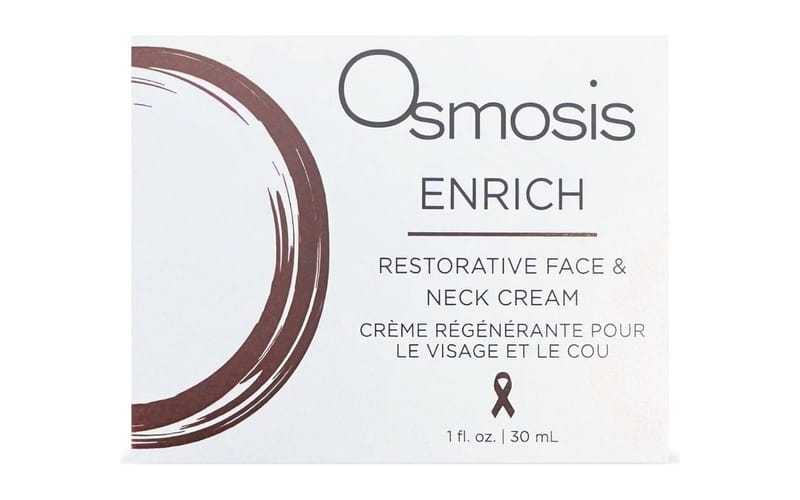
- Moisturiser. Enrich is a rich face and neck cream for dry, sensitive and ageing skin; Osmosis describes it as a night cream. It contains almond and apricot kernel oils and a macadamia-derived ingredient, so read the ingredient list and check with your doctor first if you have a nut allergy. Allergy & Anaphylaxis Australia — Cosmetics containing food allergens
- Sunscreen. None of the products above is a sunscreen. Choose a broad-spectrum, water-resistant sunscreen of SPF 50 or 50+. Cancer Council — Preventing skin cancer Sensitive skin may suit a low-irritant formula. DermNet — Sunscreens
Our posts on Cleanse or Purify, Boost or Balance, Calm, Correct or Renew MD and Catalyst or Catalyst MD go into each choice.
How do you add a new product without upsetting your skin?
Introduce one new product at a time, and try it on a small area before using it all over your face. DermNet — Sensitive skin
Try an open application test: apply it to a small patch, such as the inner upper arm, a few times a day for several days, and watch for a reaction, which can take 24 to 72 hours to appear. DermNet — Allergic contact dermatitis
Fragrances and cosmetics are among the causes of contact dermatitis, so this matters most if fragrance has bothered your skin before. Healthdirect — Contact dermatitis
All nine Osmosis products above contain essential or citrus oils for scent, and DermNet suggests fragrance-free products for sensitive skin, so test each one first. DermNet — Sensitive skin
Topical retinoids, the vitamin A family that includes retinal, can make skin more sensitive to the sun DermNet — Topical retinoids, and so can AHAs FDA — Alpha hydroxy acids, so daily sunscreen matters even more if you use them.
Prescription vitamin A creams such as tretinoin should not be used in pregnancy, and MotherSafe's factsheet does not mention retinal, so if you are pregnant, breastfeeding or planning a pregnancy, check with your doctor, pharmacist or MotherSafe before starting a retinal serum. MotherSafe — Skin care in pregnancy and breastfeeding (PDF)
When to see your GP or dermatologist
Stop using a product that brings out a rash. See your doctor if:
- you think you might have contact dermatitis
- a rash is not getting better with treatment
- you have a rash and feel unwell or have a fever
Healthdirect — Contact dermatitis
If reactions keep coming back, a dermatologist can use patch testing to find the ingredient responsible, so bring your products or photos of their ingredient lists. Healthdirect — Contact dermatitis
See our sensitive skin guide for more on reactive skin.
What can we talk about at Melbourne Wellness?
At an advanced skin analysis appointment we can look at your skin with you, go through the products you use and the order you apply them, and help you decide what to keep, drop or add. If anything suggests you need a medical assessment, we will say so and encourage you to see your GP or dermatologist.
Questions to bring:
- Which cleanser and mist suit my skin?
- How should I start a vitamin A or vitamin C serum?
- What should I tell my GP, and when?
You may also like our posts on moisturisers for sensitive skin and vitamin C and skin.