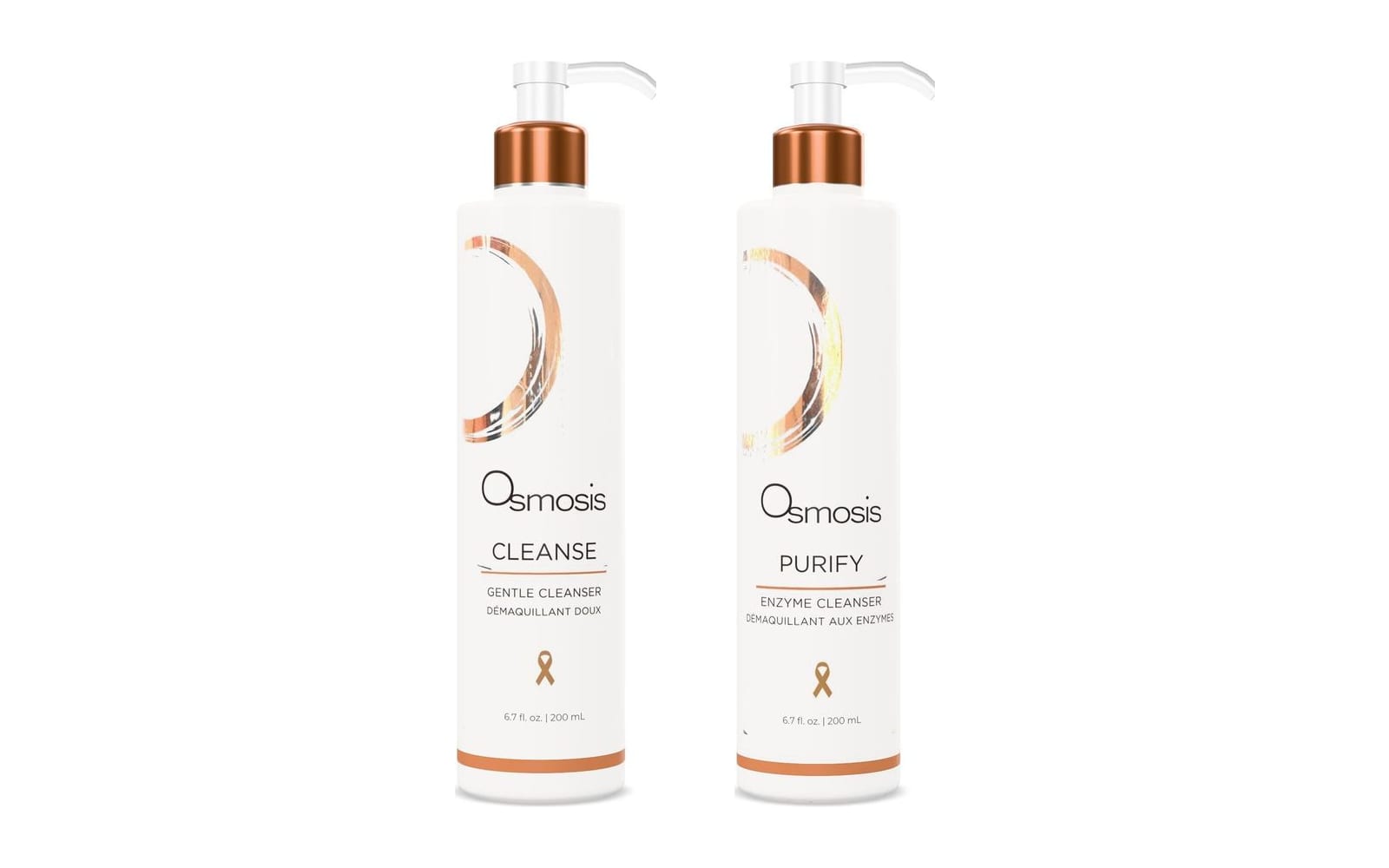
Two bottles, one step in your routine. If you are weighing up Osmosis Cleanse vs Purify, the choice comes down to your skin type and whether you want a little exfoliation when you wash. Here is how they differ, how to use them and when to swap.
Osmosis Cleanse vs Purify: what is the difference?
Cleanse is the Osmosis gentle cleanser: a soft gel wash that does not exfoliate. Its washing agents are made from amino acids, sugar and coconut. It also contains sea buckthorn fruit oil, copper gluconate, kiwi and kumquat extracts, and lavender and peppermint essential oils for scent.
Purify is the enzyme cleanser: an exfoliating face wash with a creamier, richer lather. It contains two fruit enzymes, papain from papaya and bromelain from pineapple, which Osmosis includes to loosen dull surface cells so skin looks smoother. It also has kumquat, kiwi and neem leaf extracts, sea buckthorn oil, vitamin E, and grapefruit and orange oils for scent.
Which one suits your skin?
Start with the bottle: Cleanse lists dry and sensitive skin, and Purify lists oily, blemish-prone and ageing skin. Cleanse is the one to look at if you want a simple everyday cleanser that does not exfoliate. Purify is for people who like their cleanser to exfoliate too, without scrubbing grains.
If your skin often stings, burns or turns red after using products, DermNet suggests soap-free cleansers, fragrance-free products and avoiding harsh exfoliants. DermNet — Sensitive skin Of the two, Cleanse is the one labelled for sensitive skin, and it does not exfoliate. It does contain essential oils, though, so test it first (see below).
Can you use both?
Yes. Some people keep both and switch between them: Purify on some evenings to lift away sunscreen and make-up, and Cleanse the rest of the time.
Osmosis says Purify can be part of your daily routine. If your skin is on the dry or easily irritated side, a few times a week may suit you better. How often to exfoliate depends on your skin type, and overdoing it can leave skin red and irritated. American Academy of Dermatology — Exfoliation
Using a prescription retinoid cream, or a product with retinol or benzoyl peroxide? Check with your prescriber or with us before adding an exfoliating cleanser, as exfoliating alongside these can make dryness worse. American Academy of Dermatology — Exfoliation
How do you use them?
Both come in 200 mL bottles with the same directions: massage a small amount onto damp skin, then rinse thoroughly. Osmosis suggests Cleanse morning and evening, and as the first of two washes if you like to wash twice at night. For Purify, it suggests leaving it on for an extra 2–3 minutes before rinsing for a little more exfoliation.
Dermatologists' everyday face-washing tips apply to both. American Academy of Dermatology — Face washing
- Wet your face with lukewarm water and apply the cleanser with your fingertips; cloths and sponges can irritate.
- Don't scrub.
- Rinse, then pat dry with a soft towel.
- Wash twice a day, and again after heavy sweating.
- Follow with moisturiser if your skin feels dry.
When should you swap to Cleanse?
Because Purify exfoliates, give it a break when your skin is irritated, sunburnt or freshly treated, and use Cleanse instead until your skin has settled. Dermatologists advise against exfoliating skin that is sunburnt or has cuts or wounds. American Academy of Dermatology — Exfoliation After an in-clinic treatment such as a peel or skin needling, follow the aftercare advice you were given before going back to an exfoliating cleanser.
Both cleansers contain essential oils: lavender and peppermint in Cleanse, grapefruit and orange in Purify. If your skin is sensitive or has reacted to fragrance before, test before using either one on your face.
Natural or synthetic, fragrance is a common cause of allergic skin reactions. Healthdirect — Contact dermatitis DermNet — Fragrance allergy To test a cleanser, apply it to a small patch of skin, such as the inside of your elbow, and rinse it off after a minute or so. Repeat twice a day for a week, and if the patch turns red, dry or itchy, don't use the product. DermNet — Open application test
When to see your GP or dermatologist
See your GP if:
- you are worried about a rash, it is not getting better with treatment, or you also feel unwell or have a fever Healthdirect — Contact dermatitis
- you think you may be allergic to something you use: your doctor can refer you to a dermatologist for patch testing to find the cause Healthdirect — Contact dermatitis
- breakouts are severe, worrying you, or not improving with what your pharmacist recommended, as untreated acne can leave scars Healthdirect — Acne
Our sensitive-skin guide and our post on acne management go into these questions in more detail.
What can we talk about at Melbourne Wellness?
If you are still unsure which cleanser fits, bring your current products or photos of their labels. At an advanced skin analysis appointment we can look at your skin with you, go through your routine and talk about whether Cleanse, Purify or both would suit it.
Questions worth bringing:
- How does my skin feel after I wash it now?
- Am I already using something that exfoliates?
- Which new products should I patch test first?
- How will we know whether my routine suits my skin?
If your skin reacts easily, our post on finding a comfortable moisturiser routine may also help.