Growth factors, conditioned media, exosomes: the words on a growth factor serum can sound more like a laboratory than a bathroom shelf. Here is what they mean, what the research can and can't tell us, and where Osmosis StemFactor Growth Factor Serum fits in a routine.
What is a growth factor serum?
Growth factors are signalling proteins that cells release to communicate with each other. Jafarzadeh and colleagues — systematic review, 2025 A growth factor serum contains them, often taken from human skin cells grown in a laboratory. Aldag and colleagues — growth factor cosmetics, 2016
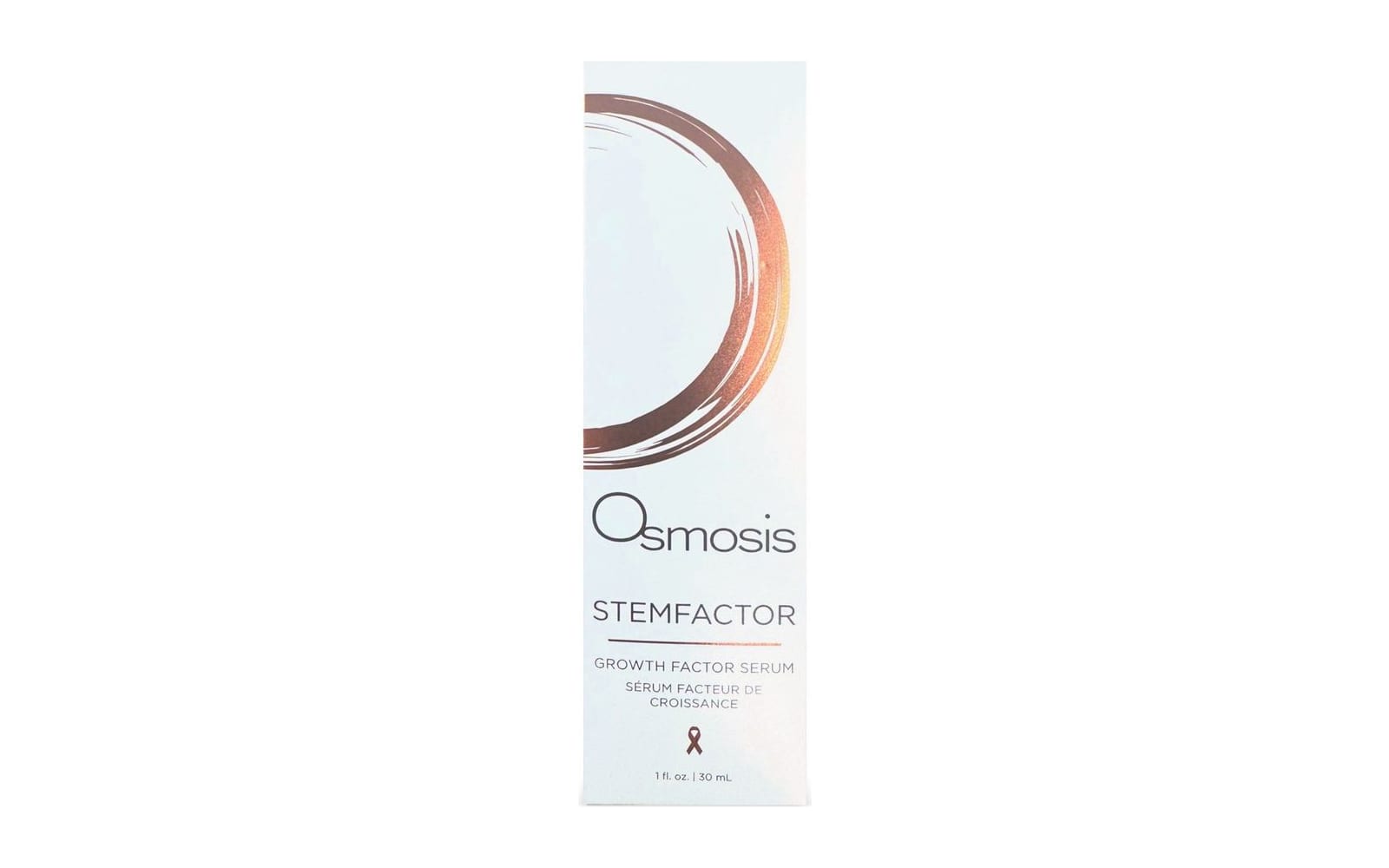
StemFactor is a light 30 mL serum with nine ingredients. As its ingredient list shows, its two key ingredients come from human cell cultures: human stem cell conditioned media and human fibroblast conditioned media. Fibroblasts are cells from the skin's deeper layer. Aldag and colleagues, 2016
Alongside them are witch hazel, lemon peel oil and phosphatidylcholine, which Osmosis uses to form liposomes: tiny fat-based bubbles that carry other ingredients.
What does "conditioned media" mean on a label?
Conditioned media is the nutrient-rich liquid collected after cells have been grown in it. It holds the proteins, growth factors and other signalling molecules the cells released, and it is this liquid, not the cells, that goes into a product. What it contains depends on the type of cell, how the cells were grown and how the liquid was processed, so products are hard to compare. Jafarzadeh and colleagues, 2025
What are exosomes in skincare?
Exosomes are tiny packages, measured in billionths of a metre, that most cells release. Each one is wrapped in a membrane and carries proteins and other molecules from one cell to another. Bai and colleagues — exosome review, 2024
Osmosis describes StemFactor's technology as exosome-based. There are no agreed standards yet for how exosomes in skincare are sourced or prepared. Bai and colleagues, 2024
What can the research tell us, and what can't it?
The evidence for growth factor and exosome skincare is limited, so keep your expectations modest.
- Growth factors are large molecules, and molecules that size don't pass easily through the skin's tough outer layer. Aldag and colleagues, 2016
- A 2016 review, written by employees of a company that sells some of the products it covers, found mostly small studies, many with no comparison cream, and mixed results in those that had one. It concluded the data are limited and better trials are needed. Aldag and colleagues, 2016
- A 2024 review found just four small clinical studies of exosomes for the look of skin, with 16 to 56 people each, and not yet enough evidence to support wide use. Bai and colleagues, 2024
- A 2025 systematic review of 19 studies was hopeful, but many studies were small, short or had no placebo, and many paired these ingredients with microneedling, laser or injections rather than a serum alone. Side effects were mostly mild redness, and long-term safety is unknown. Jafarzadeh and colleagues, 2025
None of these studies tested StemFactor, so they can't tell you what it will do for your skin. If you try it, judge it by how your skin looks and feels.
How do you use Osmosis StemFactor, and who might it suit?
The box says to apply two pumps, or the amount you prefer, to clean skin morning and evening, then any other serum and a moisturiser if needed. It is often the first serum after your cleanser, and Osmosis suggests smoothing any leftover onto the backs of your hands. Our skincare routine order guide shows where a serum sits.
The box lists ageing, dry, sensitive and easily irritated skin, and an uneven-looking tone. It may suit you if you want a light serum with a short ingredient list to add to your current routine.
Before you start:
- StemFactor contains lemon peel oil, a scented plant oil. Fragrances, natural or synthetic, are a common cause of allergic skin reactions. DermNet — Fragrance allergy Try it on a small area first, and add one new product at a time. DermNet — Sensitive skin
- StemFactor is not a sunscreen. Cancer Council recommends a broad-spectrum, water-resistant SPF 50 or 50+ sunscreen every day the UV index is forecast to reach 3 or above. Cancer Council — Sun safety
When to see your GP or dermatologist
Some skin changes need a doctor, not a new serum. See your GP if you notice:
- a new spot, a mole or freckle that changes in colour, size, shape or thickness, a crusty sore that doesn't go away, or a small red, pale or pearly lump healthdirect — Skin cancer checks
- a red, itchy or swollen rash after a new product. Stop using it, and see your GP if you are worried, it isn't improving, or you feel unwell or feverish healthdirect — Contact dermatitis
Our pigmentation guide explains which skin changes need a medical check before cosmetic care.
What can we talk about at Melbourne Wellness?
At an advanced skin analysis appointment, we can look at your skin and routine with you and talk through whether a serum like StemFactor fits, and what to realistically expect.
Questions to bring:
- Where would StemFactor sit in my routine?
- How will I know if a new serum doesn't suit my skin?
- Which sunscreen will I happily wear every day?
For a seasonal review, see our post on moving your skincare routine from winter into spring.