If you use Osmosis skincare, you may have been told to follow your serum with a facial mist. Osmosis makes two, Boost and Balance, and they suit different skin. Here is what an Osmosis facial mist is for, how the two differ and how to use one well.
What does an Osmosis facial mist actually do?
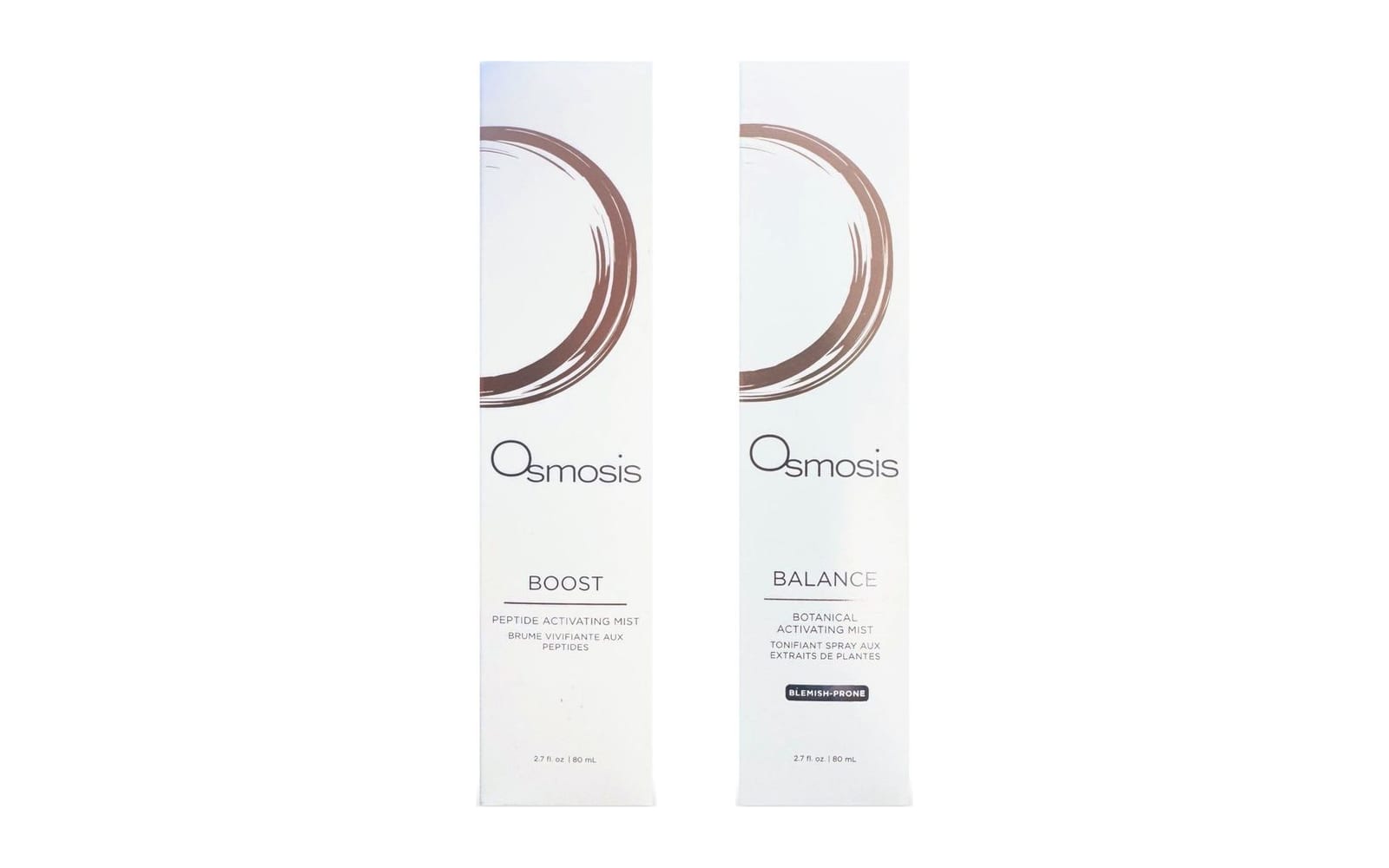
"Activating mist" is Osmosis's name for its face spray step: a light, water-based mist that goes on after your serum. A few sprays, pressed in, help your serum spread evenly and leave skin feeling hydrated.
Both mists contain humectants, such as panthenol and glycerin. These water-loving ingredients draw water into the skin's outer layer. Humectants can also let that water evaporate, so moisturisers usually pair them with richer ingredients that hold it in. Moisturiser review, Clinical Medicine & Research (2017) A mist goes under your moisturiser, not instead of it, and it is not a sunscreen.
Osmosis also treats both formulas with what it calls proprietary frequencies, its own description of its process; we make no claim about it.
How are Boost and Balance different?
Both come in 80 mL bottles.
Boost, the Peptide Activating Mist, is the hydrating one: polyglutamic acid and sodium hyaluronate (a form of hyaluronic acid), a peptide called acetyl tetrapeptide-5, beta-glucan, and hibiscus and green tea extracts, with lemon and bergamot oils for scent. If you want a hyaluronic acid face mist, Boost is the one of the two that has it. Its box lists ageing, pigmented, sensitive, irritated and dry skin.
Balance, the Botanical Activating Mist, is made for oily, congested and blemish-prone skin. Witch hazel water and denatured alcohol sit near the top of its list, with two alpha hydroxy acids (AHAs), mandelic and lactic acid, plus neem, red algae, tea tree, turmeric and holy basil, and lavender, peppermint and grapefruit oils for scent. Osmosis says it helps skin look smoother and brighter, and feel hydrated.
AHAs are exfoliating acids: they loosen dead cells on the skin's surface, more or less depending on the acid, its strength and the product's pH. They can cause burning, swelling or a rash in some people, and they can make skin more sensitive to UV, so the US FDA advises sun protection while you use an AHA product and for a week after you stop. US FDA — Alpha hydroxy acids
Which one suits my skin?
Start with your skin type, then how easily it reacts:
- Dry, tight or easily irritated skin: Boost, whose list has no denatured alcohol, mandelic acid or lactic acid.
- Oily or congested skin that rarely stings: Balance, which is made for it.
- Oily skin that stings easily: take care. AHAs and fragrance ingredients are common irritants for sensitive skin, and Balance contains both. DermNet — Sensitive skin Boost is the gentler place to start.
A mist is optional: if your routine already feels comfortable, you do not need one.
How do I use an activating mist?
Osmosis's directions: spray after your serum, then massage it in. In a full routine:
- Apply your serum.
- Close your eyes and spray: three to five sprays of Boost, or several of Balance.
- Press or massage the mist in with your fingertips.
- Follow with moisturiser if your skin needs it.
- In the morning, finish with sunscreen.
Cancer Council recommends broad-spectrum SPF 50 or 50+ sunscreen every morning when the UV index is forecast to reach 3 or more, applied evenly over dry skin, so let the layers underneath settle first. Cancer Council — Preventing skin cancer
You can mist again through the day, and Osmosis suggests a few sprays of Boost before make-up.
Patch test first. Both mists contain essential or citrus oils, and fragrances, cosmetics and plants are all possible causes of allergic skin reactions. Healthdirect — Contact dermatitis Try a new mist on a small area, such as the inside of your upper arm, a few times a day for several days before using it on your face. DermNet — Allergic contact dermatitis Add one new product at a time. DermNet — Sensitive skin
When to see your GP or dermatologist
Stop using any product that gives you an itchy red rash, swelling or blisters. See your GP if you are worried, if it is not getting better, or if you also feel unwell or have a fever. For a suspected allergy, your GP can refer you to a dermatologist for patch testing. Healthdirect — Contact dermatitis
See your GP, too, about breakouts that are severe, scarring or not improving with pharmacy treatment. Untreated acne can leave scars. Healthdirect — Acne
If your skin stings or reacts to lots of products, our sensitive skin guide explains possible causes and when to get it checked.
What can we talk about at Melbourne Wellness?
At an advanced skin analysis appointment we can look at your skin with you, go through your products and talk about whether a mist belongs in your routine. If anything suggests you need a medical opinion, we will say so.
Questions you might bring:
- Does a mist add anything to the serum I already use?
- Is my skin closer to what Boost or Balance is made for?
- Which ingredients have bothered my skin before?
See also our posts on reviewing your skincare routine one step at a time and finding a comfortable routine for sensitive skin.