Dark spots on your face, or an uneven skin tone that deepens every summer, can leave you wondering what to try. Here is what causes them, what skincare can and can't do, why sunscreen comes first, and which spots need a doctor's check.
What causes uneven skin tone and dark spots?
Three causes are common:
- Sun spots (age or liver spots) are flat brown spots on skin that has had years of sun. Unlike freckles, they don't lighten in winter. DermNet — Solar lentigo
- Marks after pimples, rashes or burns appear where skin was inflamed or injured. They usually improve with time, but last longer in darker skin and sometimes stay. DermNet — Postinflammatory hyperpigmentation All About Acne
- Melasma is blotchy brown patches on both sides of the face. It is more common in women, usually starts between 20 and 40, and is linked to sun and visible light, hormonal changes such as pregnancy or the pill, and family history. DermNet — Melasma
Some skin cancers can look like a sun spot, so ask your GP about any spot you're unsure of. DermNet — Solar lentigo Cancer Council — Spot checks
Why is sunscreen the most important step?
Sunlight darkens all three: sun spots come from years of UV, marks darken in the sun, and melasma can return with summer sun. Sun protection comes first for every kind of spot. DermNet — Solar lentigo DermNet — Postinflammatory hyperpigmentation RACGP — Melasma
Cancer Council recommends a broad-spectrum, water-resistant SPF 50 or 50+ sunscreen every day the UV index is forecast to reach 3 or above. Use about a teaspoon for your face, neck and ears, reapply at least every two hours outdoors, and add a broad-brimmed hat, clothing, shade and sunglasses. Cancer Council — Sun protection
For melasma, doctors prefer sunscreens with iron oxides, which also screen out some visible light; tinted make-up contains them too. RACGP — Melasma Our spring skincare post has more on sun protection.
What can vitamin C, exfoliation and vitamin A do?
Each can play a part, but none replaces sun protection, without which spots tend to return. Stronger creams for pigmentation are medicines, so ask your GP or dermatologist about those. RACGP — Melasma DermNet — Solar lentigo None of the research below tested the products we stock.
Vitamin C serums
Vitamin C is a popular serum ingredient for a brighter, more even look. A dermatology review found few, small clinical studies, noted that vitamin C breaks down easily so formulas matter, and said it may work less well on pigment than some medicated creams. Al-Niaimi and Chiang 2017 A serum goes on before sunscreen, not instead of it. More in our post on vitamin C and skin.
Gentle exfoliation
Exfoliating removes dead surface cells, and some people find it improves how their skin looks. Overdoing it leaves skin red and irritated, and strong scrubs or acids can cause new dark spots, especially on darker skin. Go gently, moisturise afterwards, and skip sunburnt or broken skin. American Academy of Dermatology — Exfoliation
Vitamin A serums
Most research on vitamin A and a more even-looking tone is on tretinoin, a prescription cream: in six-month trials, sun-damaged skin looked smoother and less blotchy. Retinal and retinol have been studied much less, though they irritate less. Mukherjee et al. 2006
Start slowly, with a gentle formula every second night and a moisturiser: irritation can leave dark marks on darker skin. Use it at night, as it can make skin more sun-sensitive. American Academy of Dermatology — Retinoids
Prescription vitamin A creams such as tretinoin should not be used in pregnancy, and MotherSafe's factsheet does not mention retinal, so if you are pregnant, breastfeeding or planning a pregnancy, check with your doctor, pharmacist or MotherSafe before starting a retinal serum. MotherSafe also says to avoid skin-bleaching hydroquinone while pregnant or breastfeeding, and that sunscreen is safe. MotherSafe — Pregnancy factsheet (PDF)
When to see your GP or dermatologist
See your GP if you notice:
- a new spot, or a mole, freckle or spot that changes in size, shape, colour or thickness, bleeds, itches or looks different from the others healthdirect — Skin cancer checks Cancer Council — Spot checks
- a crusty sore that isn't going away, or a small red, pale or pearly lump healthdirect — Skin cancer checks
- brown patches on both sides of your face, especially if they began in pregnancy or on the pill. This may be melasma, which needs a doctor's diagnosis, and peels, lasers and IPL can make it worse. DermNet — Melasma
- breakouts that are severe, worrying you or not improving with what your pharmacist suggests, as untreated acne can leave scars healthdirect — Acne
Our pigmentation guide explains what an assessment covers.
What can we talk about at Melbourne Wellness?
At an advanced skin analysis appointment, we can look at your skin and routine with you, and we'll suggest your GP first for any new, changing or unclear spot.
Questions to bring:
- Which sunscreen will I happily wear every day?
- Is my routine too harsh for my skin?
- What, if anything, should I add first?
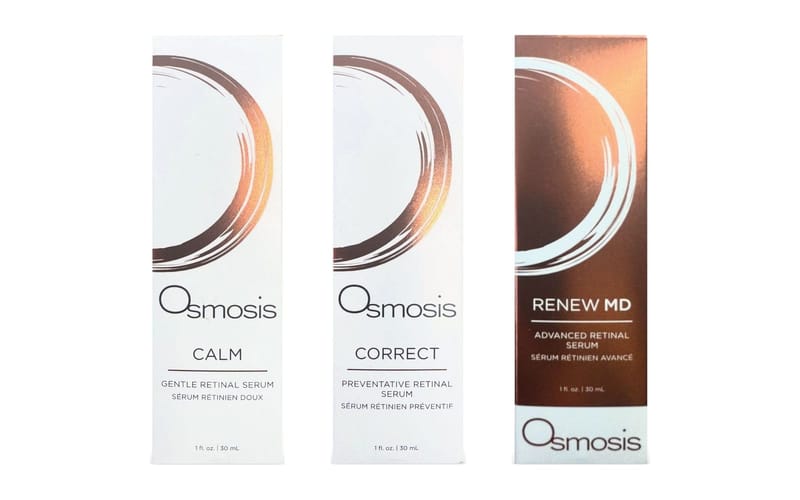
Among the Osmosis products we stock, Catalyst and Catalyst MD are vitamin C serums made to help skin look brighter and more even, Replenish is an antioxidant serum, Purify is an enzyme cleanser that gently exfoliates, and Correct and Renew MD are retinal (vitamin A) serums. For the two MD-range products, Catalyst MD and Renew MD, a skin consultation is recommended.